Empowering Youth and Women: Skill Development as a Tool for Sustainable Change in Pakistan
Pakistan has one of the youngest populations in the world, with more than 60% of its citizens under the age of 30. While this demographic dividend holds immense potential, limited access to quality education and practical skills continues to keep millions trapped in poverty. In rural areas like Tehsil Mian Channu, young boys and girls often lack opportunities beyond basic schooling, leading to high unemployment rates and low economic participation, especially among women.
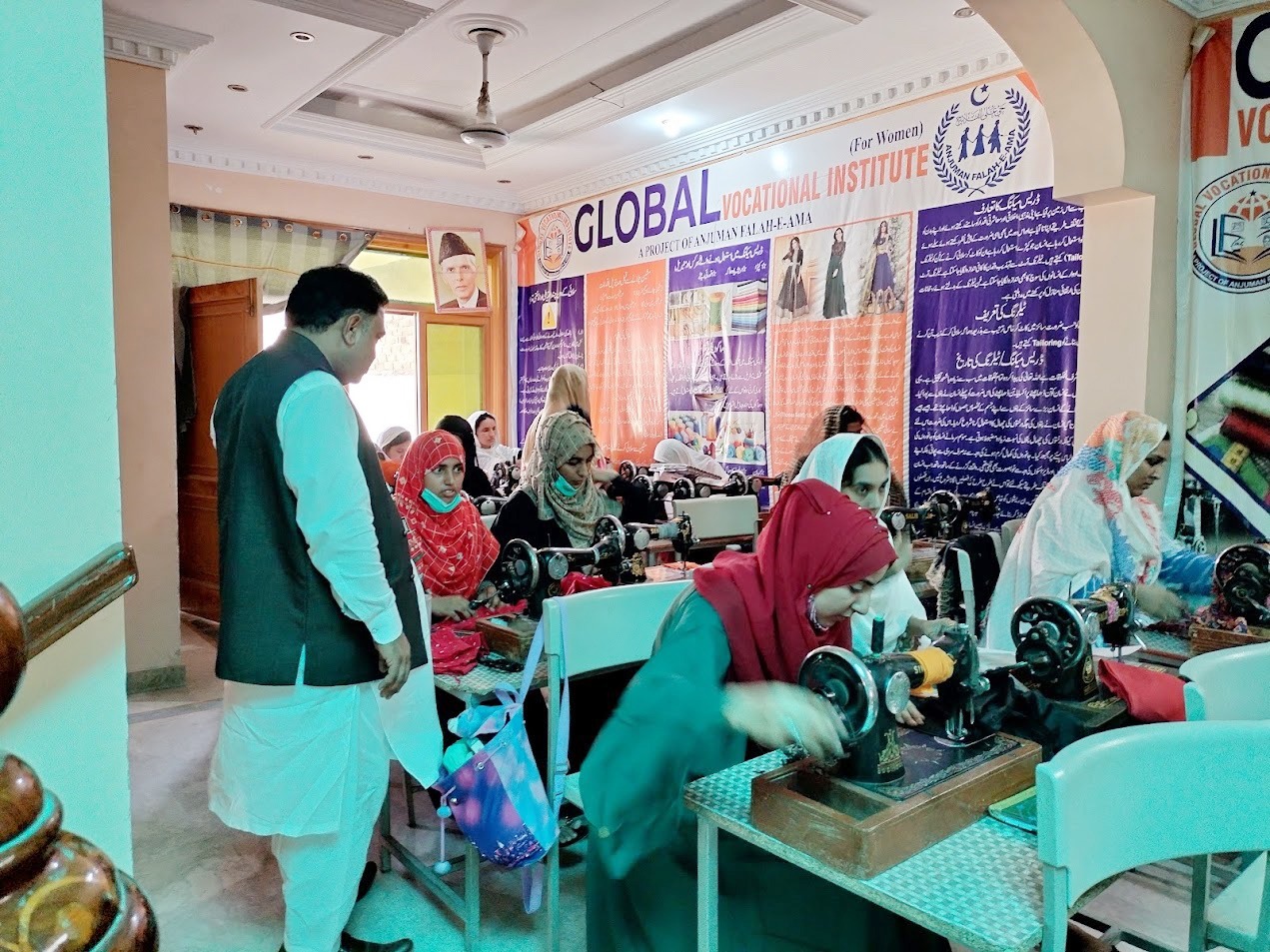
Skill development has emerged as one of the most effective tools to break this cycle of poverty. Vocational training equips individuals with market-relevant skills, enabling them to earn a dignified livelihood and contribute to their families and communities. Recognizing this need, Anjuman Falah-e-Aama established the Global Vocational Institute in Mian Channu to provide free and subsidized training to underprivileged youth and women.
The institute offers practical courses in high-demand areas including:
- Computer & IT Skills (MS Office, graphic design, internet & basic programming)
- Stitching & Tailoring (dress designing, embroidery, and garment making)
- Beautician Course (skincare, makeup, hairstyling, and salon management)
- Cooking & Baking (Pakistani, continental, and home-based catering skills)
These courses combine theoretical knowledge with hands-on practice in a well-equipped environment. Many graduates have already started small home-based businesses, contributing to household income and gaining financial independence. For women, in particular, these skills open doors while respecting cultural values, allowing them to work from home or within their communities.
The importance of women’s empowerment through skill development cannot be overstated. Educated and skilled mothers raise healthier families, invest more in their children’s education, and strengthen local economies. In rural Punjab, where traditional gender roles often limit opportunities, initiatives like Global Vocational Institute are creating quiet revolutions in many households.
Anjuman Falah-e-Aama also collaborates with government programs and focuses on holistic development. Students not only learn technical skills but also receive guidance on entrepreneurship, financial literacy, and confidence-building. The institute regularly receives appreciation from local authorities and organizations like NAVTTC for its quality training and community impact.
However, the challenge remains massive. Thousands of young people in South Punjab still wait for such opportunities. Expanding vocational centers, providing toolkits to graduates, and creating job placement networks are crucial next steps. Sustainable change requires partnership between NGOs, government, and civil society.
On this journey, the role of donors and well-wishers is invaluable. Every contribution toward skill development programs yields long-term returns — one trained individual can support an entire family and inspire others in the community.
As Pakistan strives for economic stability and social progress, investing in human capital through vocational education is not just charity — it is nation-building. Anjuman Falah-e-Aama remains committed to transforming lives, one skill at a time.
We invite individuals and organizations to support this mission through donations, volunteering, or sponsoring deserving students. Your support can help bright young minds and talented women unlock their true potential.
Together, let’s build a skilled, self-reliant, and prosperous Pakistan.